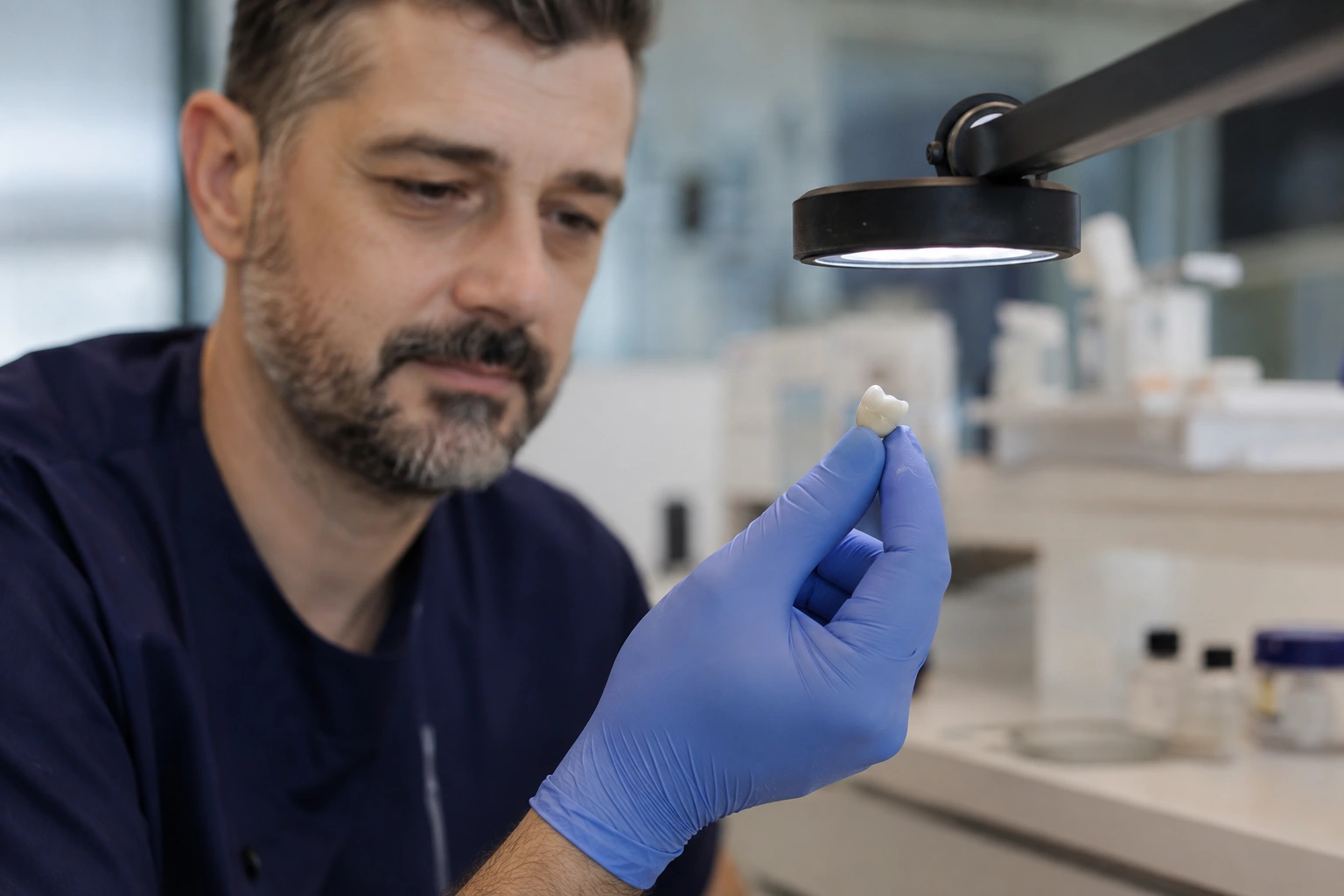
A damaged tooth may need a crown to restore its shape and function. If you are comparing same-day crowns with a restoration made by a dental laboratory, it helps to focus on the condition of your tooth and the proposed plan, as well as the number of visits.
What does a crown do?
A crown covers a tooth. It may be recommended when a tooth is weakened, broken or has too little remaining structure for a large filling. Crowns also have roles in some bridges and implant restorations. Your dentist should explain the specific reason for the recommendation.
Two ways a restoration may be made
Some practices use digital design and in-office milling to make selected crowns during one visit. Other crowns are made by a dental laboratory and fitted at a later appointment. The material, condition of the tooth, design, fit and clinical planning all matter. The visit count alone does not prove that one crown will look better or last longer.
Milling and printing are different manufacturing processes. A milled restoration is shaped from a block of material; it should not automatically be described as a printed crown. Ask the treating dentist to explain the technique and material proposed for your tooth.
Valley Ranch’s published approach
The practice’s original article describes working with dental laboratories and states that it does not offer same-day crowns. Contact the office to confirm its current workflow, the likely appointment sequence and whether a temporary restoration will be needed.
What to discuss before deciding
Ask why a crown is recommended, whether a filling or another restoration is an option, and what material is proposed. Find out how your bite and the fit of the crown will be checked. Discuss the expected appointments, the fee, insurance estimates and the plan if the tooth needs additional treatment.
Appearance also deserves a conversation. Explain what matters to you about shade and shape, particularly for a visible tooth. Your dentist can discuss the possibilities and limitations of the chosen material and method without promising an exact result.
Care after placement
A crown remains part of a mouth that needs ongoing dental care. Ask for instructions about cleaning around it and what symptoms should prompt a call. Tell the office if your bite feels different, the crown feels loose or discomfort persists. The appropriate advice depends on the finding.
At your consultation, the useful question is not simply “How quickly can this be finished?” It is “What is the appropriate restoration for this tooth, and what does the complete plan involve?” Bring both questions to the conversation.
Originally published by Valley Ranch Family Dentistry. Editorial update: September 7, 2026. General educational information; your dentist can discuss how it applies to your own care.