
Concept preview prepared for Valley Ranch Family Dentistry by Clavren. This is not the practice's website.

Dental care / Irving, Texas

Inlays & onlays.

An option between a filling and a full crown, when the tooth and damage make it suitable.
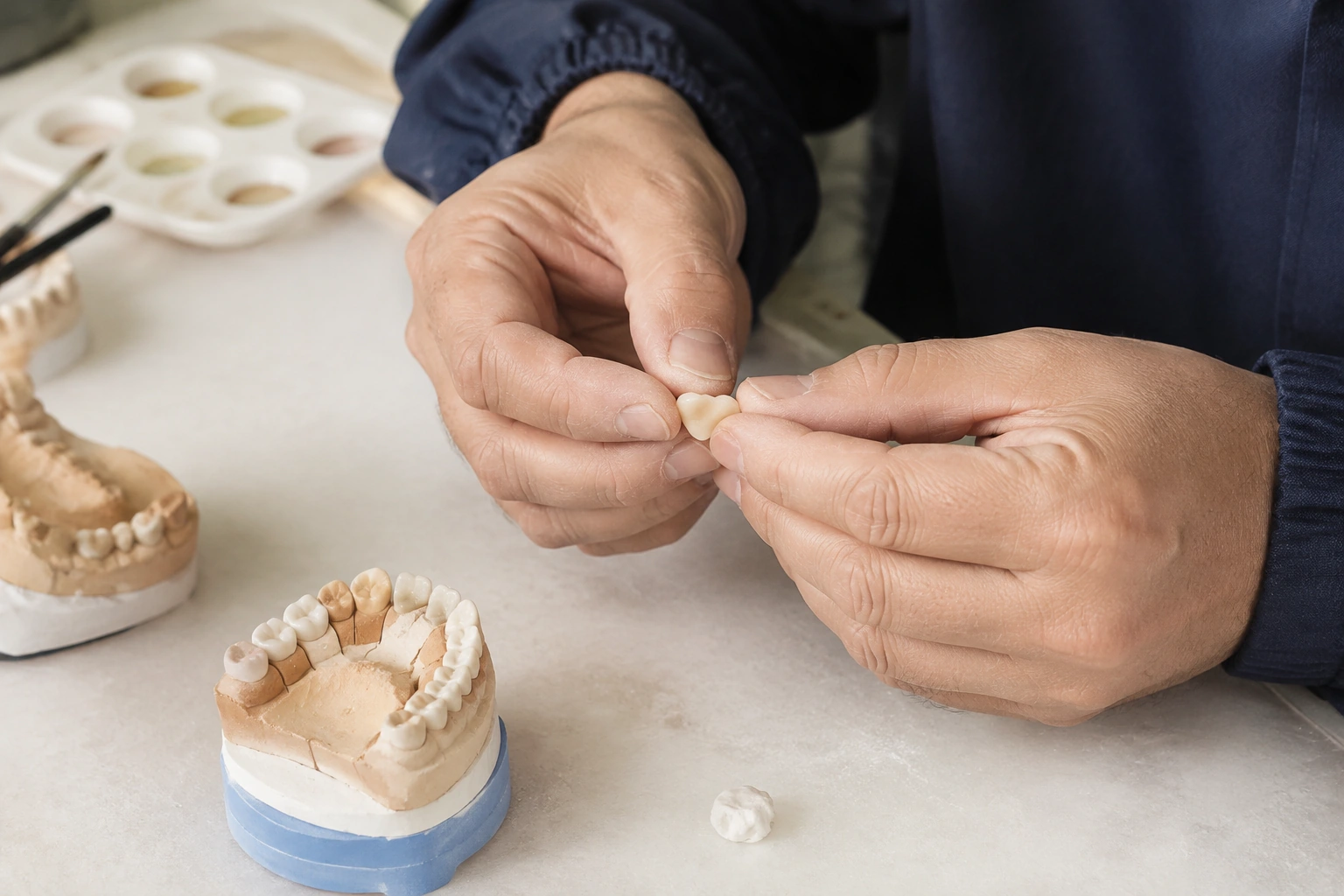
A ceramics technician’s clean hands examining a small tooth-colored onlay over a chalk work surface.

If you have a large area of decay that needs restoration, you do not necessarily need a crown. A more conservative option, inlays and onlays, fit into a tooth similarly to a filling, but they are milled restorations, much like a crown. The bumps on top of a tooth are called cusps. Inlays fit between cusps, while onlays fit over one or more cusp. Inlays and onlays allow a patient to retain more natural tooth structure than crowns, which is always best.

An inlay or onlay is not right for every situation, but the dentist assesses problems and determines the best solution. Because they are created in a lab like a crown, inlays and onlays require two appointments. At the first visit, we prepare your tooth by removing decay or old fillings and cleaning the area. We take dental impressions and send them to our lab where a technician creates a custom inlay or onlay. The dentist determines the best material to use, but in most cases, teeth that show when you smile or speak will have a tooth-colored restoration. Back teeth experience extreme pressure, so a metal inlay or onlay may be indicated. You’ll wear a temporary until the lab delivers your final restoration.

At the second appointment, the dentist removes the temporary and permanently cements the final inlay or onlay into position. After polishing and modifying the restoration as necessary to ensure proper bite alignment, you’ll enjoy your stronger, healthier smiles for years to come.

Your examination, medical history and goals help determine the right approach for you. Our team can explain the available options, timing and costs before you decide.
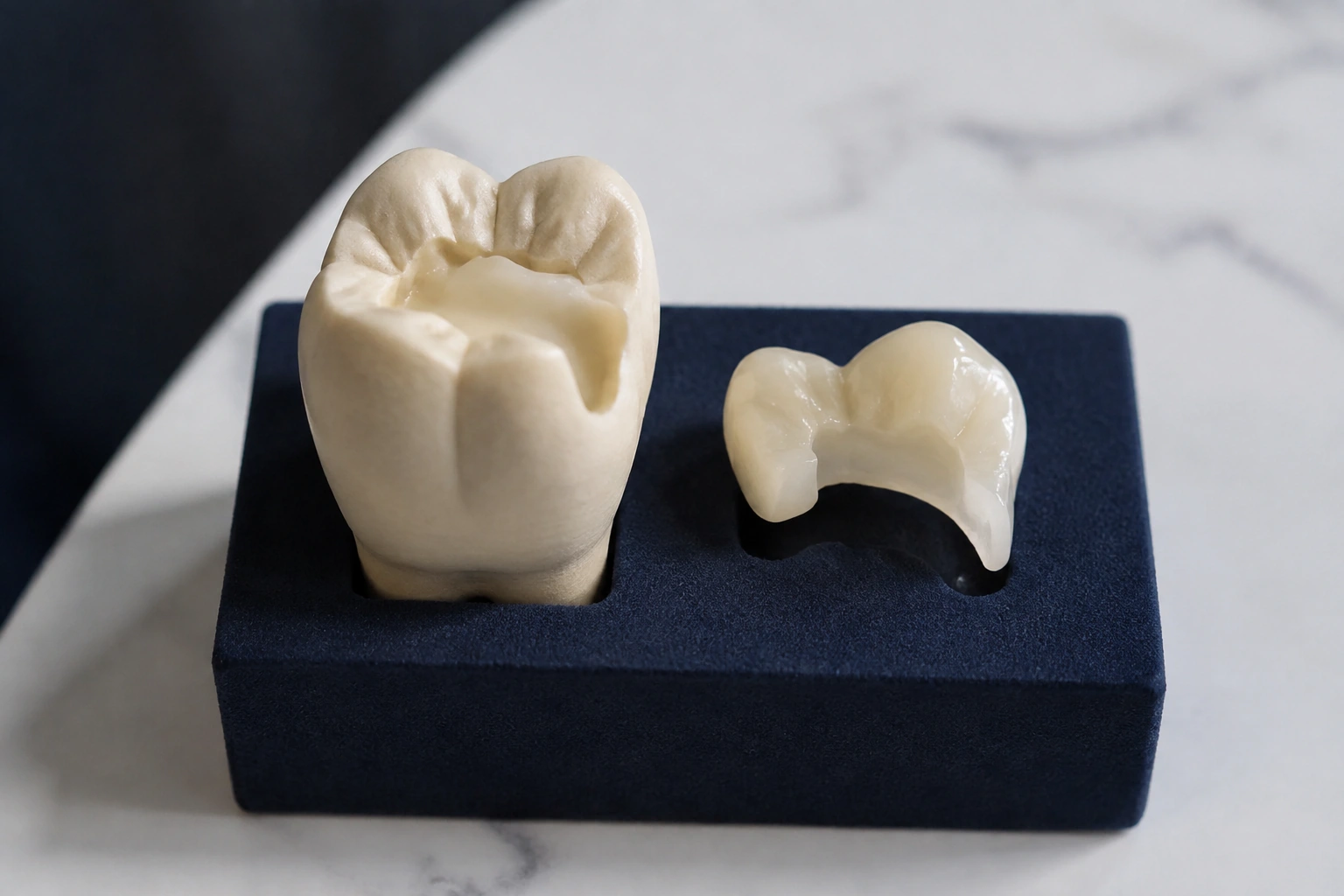
An ivory molar teaching model and a separate matching ceramic onlay seated on a secure foam block.

Your care, understood

Match the restoration to the tooth.

An inlay or onlay is a custom restoration. Ask how much of the tooth needs to be restored, what material is proposed and how the restoration will be fitted. Your dentist can explain alternatives after examining the tooth.

Questions to bring.

  1. Why an inlay or onlay rather than a filling?
  2. What is the material and visit sequence?
  3. How should I care for the restoration?
Prepare for your visit

Further reading

Patient information from professional and public health organizations.

Continue exploring

Your next step

Let’s talk about
your dental health.

Bring your questions. We’ll help you understand your options and plan a visit.